
How Long Does Sperm Live?
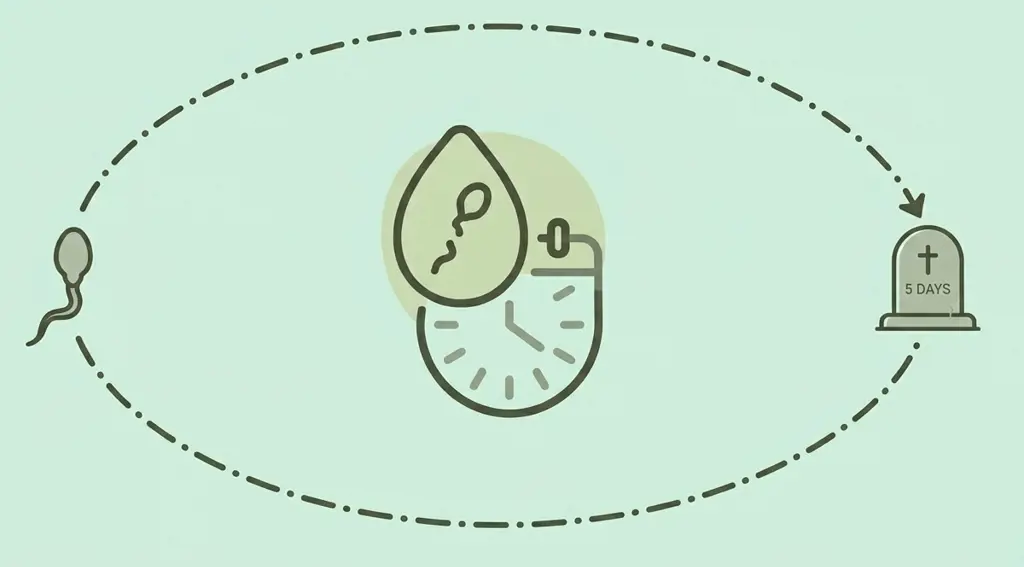
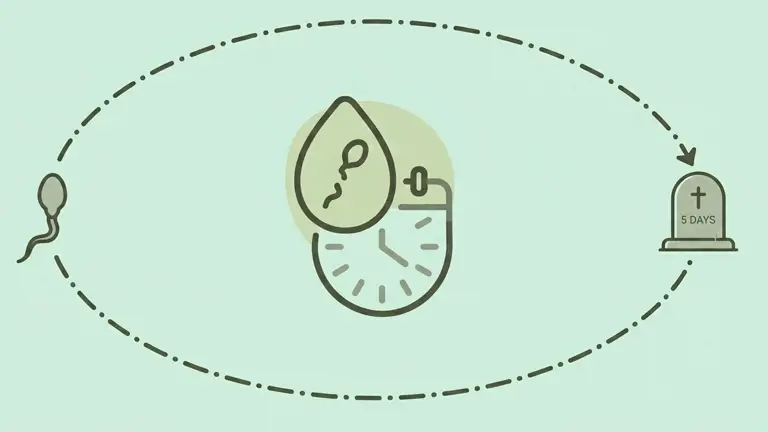
Sperm typically live up to five days in the female reproductive tract, an hour outside of the body and almost indefinitely when frozen in laboratory conditions. However, various factors influence sperm longevity in all of these instances. In this article, we field common questions regarding the lifespan of sperm and explore what the answers mean for conception and pregnancy.
10 min. read
Life span of sperm
How long does sperm last in the body?
Most sperm last between three and five days in the female reproductive tract. While they have been known to last up to seven days, this isn’t common. As an egg can only be fertilised 12 to 24 hours after ovulation, the sperm’s five-day lifespan helps to define a woman’s six-day fertility window.
The fertility window is the five days before ovulation (when sperm in the female reproductive tract still have a chance of surviving until ovulation) and the day of ovulation itself (when the chances of conception are highest).

How long does sperm survive outside the body?
Sperm live somewhere between a few minutes and an hour outside of the body if they are not cryopreserved. If they are frozen in laboratory conditions, they can survive for decades.
The length of time the sperm survives outside of the body is determined by the environmental conditions and the surface on which they are deposited. The main factors affecting sperm longevity outside of the body are:
- Moisture levels – sperm require a moist, nutrient-rich environment to survive. When deprived of this, they die quickly. On dry surfaces, all sperm will have died by the time the semen has dried.
- Temperature – sperm will die quickly when exposed to temperatures higher or lower than the normal body temperature of 37°C.
- Chemical exposure – exposure to chemicals, like those found in soap, will kill sperm.
Does using frozen sperm affect your chances of getting pregnant?
No, using frozen sperm does not negatively impact your chances of conceiving and getting pregnant. Studies show that long-term cryopreservation and sperm storage have no impact on clinical outcomes (Fertility and Sterility). Frozen sperm is just as effective as fresh sperm in fertility treatments.
In some instances, freezing sperm may improve your chances of getting pregnant. For example, if a man requires medical treatment that may compromise their fertility, freezing sperm enables a couple to preserve sperm for use in the future, increasing the likelihood of pregnancy.
If you’re deciding between options, this overview of IUI vs IVF explains the key differences in process and what to expect
How long does semen stay in the body?
Unejaculated mature sperm can live for several weeks in the male testicles before the body breaks them down and reabsorbs the cells. The testicles are constantly producing sperm, and millions of cells are produced daily through a process known as spermatogenesis. Spermatogenesis begins during puberty and continues throughout a man’s adult life.
How long does sperm live inside the body after ejaculation?
When sperm die in the female reproductive tract, the body treats them as it would any other dead cells and begins breaking them down naturally. Some cellular components may be recycled and reabsorbed, while others will be discarded and ejected as waste. The process is entirely natural and completely harmless.
How long does sperm survive after insemination?
Sperm typically live up to five days if insemination occurs through sexual intercourse, while washed sperm introduced via Intrauterine Insemination (IUI) will survive for around 24 hours.
As such, sperm longevity after insemination depends on the method of insemination. Washed sperm have a shorter lifespan because the washing process removes the nutritional seminal fluid that protects them. Sperm is washed for IUI treatment to:
- Prevent the cramping, infection and severe allergic reactions that can occur when seminal fluid is introduced directly into the uterus.
- Improve sperm quality. Sperm washing filters out immotile or abnormal sperm to leave a higher concentration of healthy sperm and improve chances of conception.
The fact that washed sperm do not live as long as unwashed sperm is one of the main reasons accurate timing is so important for IUI treatments.
If you’re considering treatment, read our guide to artificial insemination to understand the differences between IUI and ICI and how timing around ovulation works.
How long does it take for new sperm to form?
It takes the body around 74 days (2.5 months) to produce new sperm. The key stages in the sperm lifecycle include:
- Production (Spermatogenesis) – stem cells in the testes divide and grow into immature sperm cells called spermatids.
- Maturation (Epididymis) – the immature sperm cells travel to the epididymis, where they are matured for approximately five weeks and stored.
- Ejaculation – during ejaculation, sperm mix with fluid from the seminal vesicles and prostate gland to form semen.
- Reabsorption – if mature sperm cells are not ejaculated, they are broken down and reabsorbed by the body after several weeks.
What factors influence the chances of survival for sperm?
The main factors impacting sperm survival are:
- Sperm quality and health – healthy, motile sperm are more likely to survive the journey through the cervix. A higher sperm count also increases the likelihood of fertilisation.
- Timing – conditions within the female reproductive tract are more conducive to sperm survival during the fertility window.
- Temperature – temperatures much above and below 37°C (body temperature) will reduce the chance of sperm survival.
- Exposure to air – sperm cannot survive without their protective seminal fluid for long. Exposure to air causes this to dry out more rapidly.
- Cervical mucus – the cervical mucus changes during ovulation, becoming thinner, more alkaline and friendlier to sperm. Outside of ovulation, it is thicker and more acidic. This causes sperm to die more quickly.
- Lifestyle factors – smoking, excessive alcohol and other lifestyle factors can impact sperm quality and shorten their expected lifespan.
Even though only one sperm fertilises the egg, higher motility and count improve the odds. Here’s a short explanation of how much sperm is needed to get pregnant.

How to improve sperm health
You can improve sperm health by eating a healthy diet, limiting alcohol intake, stopping smoking, reducing stress and managing body weight by exercising regularly.
- Eat a healthy diet – a healthy, balanced diet that is rich in antioxidants and omega-3 fatty acids will improve sperm health. Think fish, nuts, seeds and leafy greens.
- Limit alcohol intake – alcohol damages sperm health, and experts recommend reducing intake or avoiding alcohol altogether when trying to conceive.
- Stop smoking – stopping smoking will improve sperm health considerably, but benefits won’t be seen until a few months after quitting.
- Manage body weight – body weight impacts hormone levels, which can reduce sperm count and motility. Exercising regularly can help you maintain a healthy weight.
- Reduce stress – stress also impacts hormone levels, so limiting exposure can help ensure you’re producing healthier sperm.

Can sperm survive in water?
Sperm tend to die quickly in water as it strips away the protective seminal fluid the cells need to survive outside of the body. Several factors determine how long sperm can survive in water:
- Presence of chemicals – chemicals like chlorine and those in soap will kill sperm almost instantly.
- Temperature – temperatures outside of the normal body range (37°C) will kill sperm very quickly. This means sperm is unlikely to survive in baths, hot tubs and heated pools.
- pH levels – sperm require a specific pH level to survive, and water that is too acidic or alkaline will kill sperm more quickly.
Generally, sperm do not survive long in any type of water. However, it will die even more quickly if that water is chemically treated, hot or too acidic or alkaline.
Does hot water kill sperm cells in a woman?
Hot water will not kill sperm if they are in the female reproductive tract, as the body insulates the cells from the higher temperatures. This means there is a chance of pregnancy from penetrative sexual intercourse between a couple in hot water.
Do sperm die when washed with water?
Sperm die quickly when washed with pure water and almost instantly when washed with chemically-treated, hot or overly acidic or alkaline water.
Can three-day-old sperm fertilise an egg?
Sperm can survive in the female reproductive tract for up to five days, and can fertilise an egg at any point during that time. Sperm outside of the body cannot survive for three days, unless it is cryopreserved, and cannot fertilise an egg.
Has anyone gotten pregnant from five-day-old sperm?
Yes, sperm typically live in the female reproductive tract for up to five days, and there is a chance that it will fertilise the egg on that final day, resulting in pregnancy. However, the likelihood of pregnancy decreases the longer the sperm is in the female reproductive tract.
Can sperm live for seven days?
Sperm can live up to seven days in the female reproductive tract in ideal conditions. However, this is unlikely, and most sperm survive a maximum of five days. Sperm will survive almost indefinitely when cryopreserved and stored safely.
Is sperm alive?
Yes, sperm are living human cells. They metabolise energy, move independently and can survive outside of the testes for anywhere from a few seconds to seven days. However, they are not an independent organism.
How to confirm whether sperm went inside?
The only way to immediately confirm whether sperm entered the vagina is to observe closely. Women may notice white or cloudy liquid coming from the vagina following sex, and this may indicate that sperm has entered the vagina.
However, it’s important to note that pregnancy is technically possible (though less likely) without sperm entering the vagina. For instance, semen can swim into the vaginal canal from the vulva, potentially resulting in pregnancy.
Learn more about sperm
Healthy, motile sperm are more likely to survive the journey through the cervix. If you are considering becoming a sperm donor or consider fertility treatment using donor spem, you should familiarize yourself with the term: MOT.