
Becoming a solo mum by choice after two children: Ami’s story
After becoming a single mother of two, Ami assumed her family was complete. Yet the dream of having another child never disappeared. In this interview, she shares how she challenged expectations, trusted her own experience, and chose to grow her family on her own terms.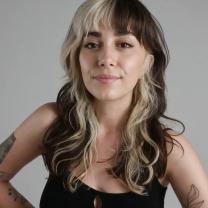
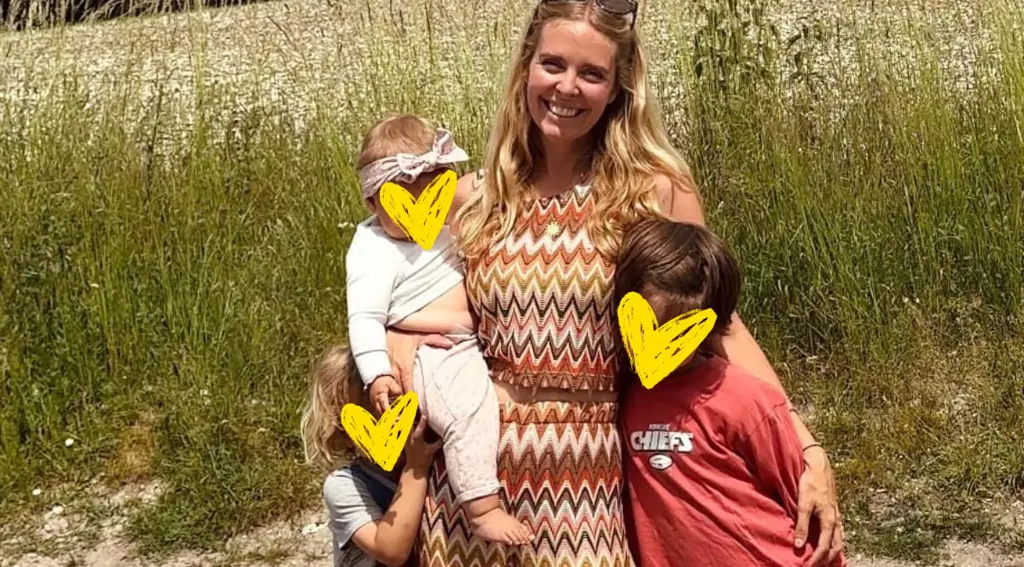
12 min. read
For many women, the idea of becoming a solo mum by choice begins with the question: Can I do this on my own? For Ami, the question was different. As a single mother already raising two children, she knew she was capable. What she had to confront instead were the expectations - both external and internalised - about what a family should look like and whether she was “allowed” to want more.
In this interview, she reflects on the journey that led her to have a third child as a solo mum by choice. She shares how she moved from self-doubt to self-trust, why she stopped waiting for the “right” circumstances, and how redefining family helped her make one of the most important decisions of her life.
How would you describe the journey from your first children to your youngest?
I always imagined myself having a big family. But after becoming a single mother of two young children, there was a time when I believed this part of my life might already be over. Not because the wish for another child disappeared, but because it was reflected back to me – sometimes subtly, sometimes quite clearly – that having another child on my own was something I probably shouldn’t consider.
Still, the desire stayed with me. Over time, it became stronger and harder to ignore. I began asking myself whether these limits were really coming from within me, or whether I had simply internalised expectations about what a family is supposed to look like and how many children a single mother is “allowed” to have.
When I was honest with myself, I realised I never truly doubted my ability to do this. I was already raising two children on my own. I knew what responsibility meant, I knew what everyday life looked like, and I knew I was capable of creating a stable and loving environment for another child.
At some point, the question shifted from “Is this possible?” to “Am I allowed to trust what I already know about myself?”
Once I reached that clarity, the decision to become a solo mum by choice felt like a natural continuation of my journey as a mother rather than a completely new path. Looking back, it wasn’t only about having another child. It was about trusting myself enough to grow my family in the way that felt right for me.
When did you first realize you wanted to become a solo mum by choice?
For a long time, I thought that having another child would only be possible within a new partnership. Even though the wish for another child was there, I assumed I would have to wait until my life looked different again.
But over time, I began to notice that I wasn’t actually waiting for the right relationship. I was waiting for permission to make a decision on my own.
What changed things for me was the realization that my wish for another child did not depend on whether there was a partner in my life or not. I already knew what it meant to raise children on my own, and I trusted myself in that role. The question slowly shifted from “Will I meet the right person?” to “Why should that be the condition for growing my family?”
That was the moment becoming a solo mum by choice started to feel like a real option. It wasn’t about replacing a partner or giving up on the idea of one. It was about recognizing that I didn’t have to wait for my life to fit a certain model before allowing myself to follow this wish.
Looking back, it wasn’t only about having another child. It was about trusting myself enough to grow my family in the way that felt right for me.
DECISION-MAKING AND EMPOWERMENT
What helped you trust your decision to grow your family again?
What helped me trust my decision most was the fact that it didn’t feel like stepping into something unknown.
I was already living everyday life as a single mother of two children. I knew what responsibility meant, how our routines worked, and what kind of support system we had around us. Instead of imagining a completely new situation, I was making a decision within a life I already understood very well.
It also made a difference that I didn’t feel alone in the broader sense. My children and I live together with my sister, and that experience shaped my understanding of family in a very practical way. It showed me that stability and connection don’t depend on a traditional structure, but on the relationships that actually exist in everyday life.
Because of that, the decision to grow our family didn’t feel like taking a risk. It felt like trusting the life we had already built.
Did you have any doubts? If so, how did you move through them?
At the beginning of my fertility journey, I did have doubts. Not about my wish for another child, but about whether I would even be allowed to take this path.
I wondered whether a fertility clinic would support my decision to have a third child as a single mother, whether I might be considered too young, or whether I would be able to stand confidently in my decision if I was met with misunderstanding from others.
What I never doubted, though, was that this step felt right for me and for my family. That clarity stayed with me throughout the process.
Looking back, I think that is exactly what helped me move through those doubts. I understood that uncertainty about how others might react is very different from uncertainty about your own decision. Once I trusted that inner certainty, it became much easier to continue on this path.
What helped you feel prepared emotionally or practically before taking this step?
What helped me feel prepared was not the idea that everything would be easy, but the experience of already living a family life that didn’t follow a traditional structure.
By the time I made the decision to become a solo mum by choice, I was already raising two children on my own and had built routines that worked for us. Even more importantly, my children and I were living together with my sister, which shaped my understanding of family in a very practical and supportive way. It showed me that stability does not depend on a specific model, but on the relationships that surround you in everyday life.
Emotionally, I also felt different than I had earlier in my life as a mother. I had already moved through many uncertainties and transitions, and I felt calmer in trusting my own decisions. That didn’t mean I expected everything to be predictable, but I knew I didn’t have to face things alone.
So preparation, for me, didn’t come from having a perfect plan. It came from recognising that we already were a strong family in the life we were living.

EXPECTATIONS AND REALITY
What’s something you were afraid of before becoming a solo mum by choice that turned out differently than expected?
One of my biggest concerns before starting this journey was how other people would react to my decision. At the beginning of my fertility journey, I did experience quite a lot of misunderstanding, and I expected that this would continue once my child was born.
But after my baby arrived, my experience was very different from what I had imagined. Especially in everyday situations, like meeting other parents in playgroups, I was often met with curiosity, encouragement, and even admiration. That surprised me.
What also became very visible to me was that people seemed to make a clear distinction between being a single mother and becoming a solo mum by choice. While single motherhood is still often associated with difficulty or concern, my decision to consciously grow my family was frequently met with respect.
That shift in reactions helped me realise that families can be understood in many different ways, and that people are often more open than we expect when they see the reality of your life.
What felt harder than you imagined? And what felt easier?
What felt much harder than I expected was the fertility journey itself, both physically and emotionally. I honestly wasn’t fully prepared for that part.
I was still relatively young, and with my first two children I became pregnant easily and without complications. At the beginning of this journey, I assumed things would be similar again. I did become pregnant quickly, but I lost the baby. A miscarriage is always painful, but going through it on your own felt especially difficult.
After that, I wasn’t able to continue treatment for several months, and for the first time I found myself facing a fear I hadn’t really considered before: what if it didn’t work at all? I had already taken what felt like the biggest step — allowing myself to admit this wish and to follow it. The possibility that it might not happen was something I hadn’t prepared myself for, and carrying that uncertainty alone was one of the hardest moments for me.
What surprised me in the opposite way was how manageable it felt to give birth on my own. By the time I reached that moment, I had already gone through such an intense journey of decisions, treatment, and pregnancy by myself that I felt very grounded in my role. In a way, the whole process had prepared me for the birth. At some point I simply felt: I can do everything.
MOTHERHOOD, IDENTITY, AND FAMILY
How has becoming a solo mum shaped the way you see yourself as a parent?
Becoming a solo mum by choice made me much more aware of my role as a mother.
Before, I mostly understood motherhood as something private — something that happens within the family. But through this decision, I began to see that the way we live as mothers also has a wider impact. The choices we make often shape what feels possible for other women and families as well.
That perspective changed how I see myself as a parent. I became more conscious of the responsibility that comes with making visible that families can grow in different ways, and that motherhood does not have to follow one specific model to be stable and loving.
In that sense, becoming a solo mum by choice didn’t just expand my family. It also changed how I understand my role as a mother in the world around me.
What kind of mother do you feel you are today?
Today, I feel like a much more conscious and confident mother than I was in the past.
Becoming a solo mum by choice changed the way I take responsibility for the life we are creating as a family. I no longer experience motherhood as something that simply happens within certain circumstances, but as something I actively shape. That has made me calmer in my decisions and more trusting in my own intuition.
I also feel more aware of the example I am giving my children. Not because everything has to be perfect, but because I want them to see that it is possible to follow your own path and build a life that feels true to who you are.
More than anything, I feel present. I experience this phase of motherhood very consciously, and I see how much strength and meaning there is in it — not only for our family, but also in the way it connects us to the world around us.
What does “family” mean to you now compared to before?
Today, family means much less a fixed structure and much more a living network of relationships.
In the past, I probably imagined family as something that followed a certain model. Now I experience it as something that grows through connection, responsibility, and the people who show up for each other in everyday life.
Living as a solo mum by choice and sharing our home with my sister changed my understanding of what stability in a family can look like. It made me realise that family is not defined by form, but by the quality of the relationships within it.
For me, family today is not a structure — it is a shape that can change and expand while still feeling whole.
I became more conscious of the responsibility that comes with making visible that families can grow in different ways, and that motherhood does not have to follow one specific model to be stable and loving.
CHOOSING A DONOR
What do you remember most about the process of choosing a donor?
What I remember most is that the process felt more thoughtful than emotional for me.
I wasn’t looking for a perfect story or a strong emotional connection. What mattered most to me was choosing someone who felt like a good fit for our family.
I wanted to have enough information to imagine who this person was and how he might relate, in a broader sense, to the family my child would grow up in. For me, the decision felt less like a symbolic moment and more like a careful and responsible step within a life I was already living as a mother.
What felt most important to you when making that decision?
Of course many aspects were important to me when choosing a donor, but what stayed with me most strongly was the moment I looked at the childhood photos.
I often found myself asking a very simple question: Could this child belong in our family? It wasn’t about finding someone perfect. It was about whether I could imagine this child naturally being part of the life we were already living together.
That question helped me approach the decision in a very personal way. It made the process feel less technical and more connected to the idea of the family my child would grow up in.
Did you know right away what you were looking for?
Yes, asbolutely!
Was there anything about the donor selection process that felt more emotional than expected?
To be honest, the donor selection process itself did not feel particularly emotional to me at first. In the beginning, it actually felt quite distant and abstract.
What I do remember very clearly, though, was how long I postponed listening to the donor’s voice message. Up until that moment, the process had felt almost technical. The voice message suddenly made it very real. It reminded me that this was not just a profile, but a real person connected to my child’s beginnings.
Hearing his voice created a sense of connection that I hadn’t expected. It also shifted something for me emotionally, because it made me realise that even though I was making this decision on my own, I wasn’t doing it in complete isolation. That was a new and slightly unfamiliar feeling at the time, but also a meaningful one.
WHAT YOU’D WANT OTHERS TO KNOW
What’s one thing you wish people understood about being a solo mum by choice?
I wish people understood that becoming a solo mum by choice is not about having a child out of lack. It is about something much bigger than that.
For me, it meant taking responsibility for my own life in a very conscious way, trusting my own decisions, and allowing myself to shape my family without waiting for permission or the “right” circumstances. It was an expression of autonomy and clarity rather than compromise.
In many ways, it felt less like stepping outside of something and more like stepping fully into my own life.
What did the people around you say when you told them?
At first, many reactions were quite sceptical, especially because it was about having a third child as a single mother. Some people also told me that I was still young and had time to “wait” and try to have another child in a more traditional way.
But once my baby was born, the reactions changed noticeably. I experienced a lot of encouragement, appreciation, and support from the people around me.
Was there a difference between how they reacted to you already being a mum versus your choice to have a third child?
Yes, there definitely was a difference.
When I became a single mother of two children, people mostly reacted with empathy and support, because it was understood as something that had happened to me. Choosing to have a third child as a solo mum by choice was different. It was seen as an active decision, and that made people ask more questions and express more concern.
In particular, my age and the fact that it would be a third child often came up. But once it became clear that this was a thoughtful and confident decision, many reactions shifted, and I experienced much more encouragement than I had expected.
Was there a specific moment or comment that stayed with you?
One comment that stayed with me came from a mother I met who lives with her husband and two children. She said to me, half joking but also very sincerely, “You must have five nannies.”
It was meant as a compliment, but it also showed me something else. There is often an expectation that because I chose this path myself, everything must feel manageable all the time. As if making a conscious decision means it cannot also be overwhelming or difficult.
Sometimes I feel that I am expected to be especially strong or capable because I chose to become a solo mum by choice. But the reality is that this life can be both deeply right and sometimes incredibly demanding at the same time.
That moment stayed with me because it captured this tension so clearly.

YOUR FAMILY TODAY
What’s a moment with your children that makes you think, “this is exactly how it was meant to be”?
One moment I often think of is when I look into the rear-view mirror while driving and see my baby in the car seat behind me.
For a long time, that seat was empty. I remember looking back so many times and feeling that absence, while at the same time knowing somewhere deep inside that it wouldn’t stay empty forever.
Seeing my baby there now reminds me that what was missing back then was not a partner. What I needed to find first was my own voice — and the trust to follow it.
In that mirror, I don’t only see my child. I also see a version of myself that finally allowed this life to happen.
What is your favourite thing about your family today?
I grew up in what many people would describe as a very traditional, stable, and loving family. And this is exactly how I feel about my own family: stable, loving, whole.
You can follow Ami's journey here.